May 15–17, 2026
Some trips are about checking places off a list. Others are about slowing down long enough to notice where you are, who you meet, and the stories you get to carry home with you. Our weekend in Pennsylvania’s Amish Country was very much the latter.
We set out on Friday morning for a few days in Lancaster County, but, as is often the case with us, getting there was part of the adventure! We made a slight detour through Villanova, Pennsylvania, where Rebecca went to college. It had been years since she had been back, and we wanted to stop at St. Thomas of Villanova Church—a place tied to so many memories from that chapter of her life.
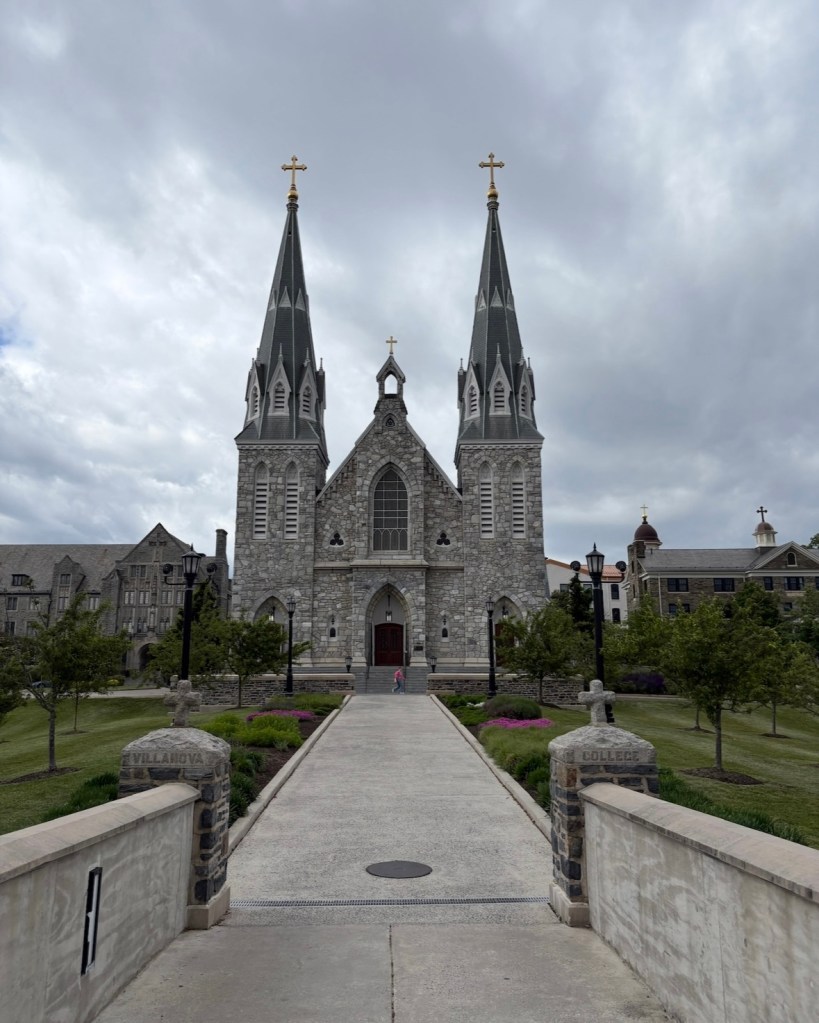
From there, we traded the suburbs of Philadelphia for rolling farmland, country roads, horse-drawn buggies, and the slower rhythm of Amish Country.
A Farmhouse Stay in Atglen
By dinnertime, we had arrived in Atglen and checked into the Spring House at Stoltzfus Farm. The property itself has quite a history. Our host, Florence Stoltzfus, told us the dairy farm had been in her late husband’s family for four generations, with the original property dating back to the late 1700s. Staying there felt less like checking into a hotel and more like being invited into a small piece of someone’s family history.
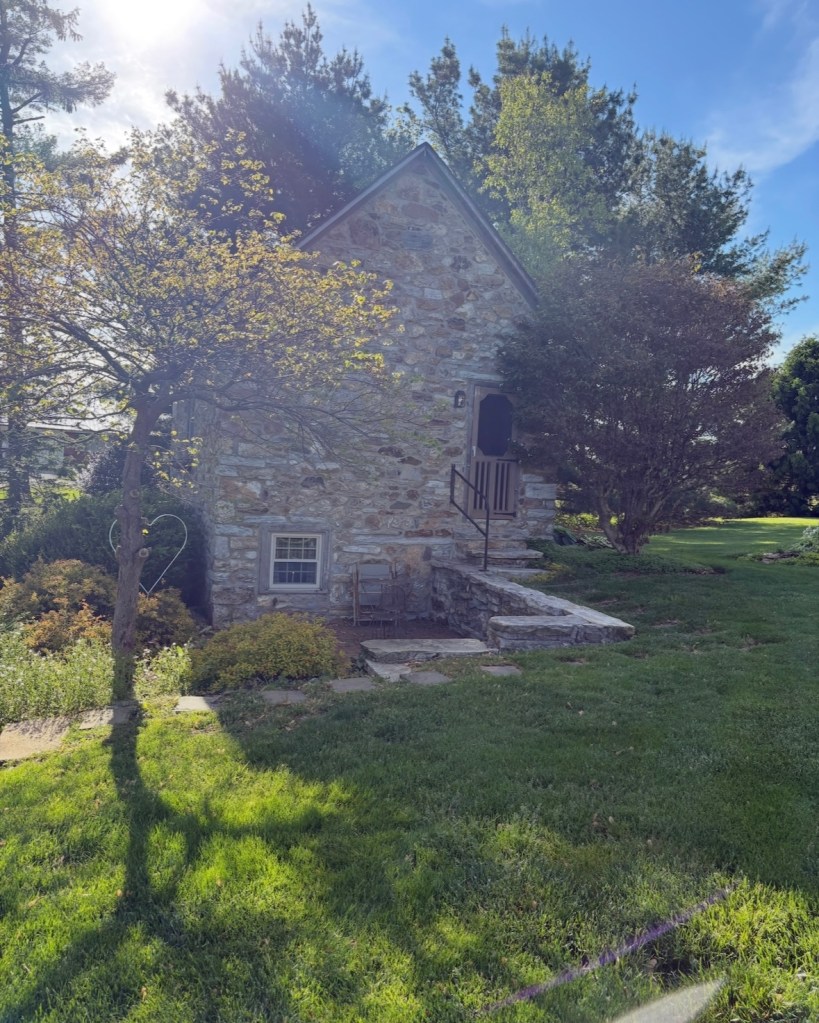
Our little Spring House was exactly the sort of place you hope to stumble upon on a weekend in the country. Downstairs was a cozy living room with a gas fireplace and a surprisingly spacious bathroom. Upstairs, a loft bedroom held a queen-size bed tucked beneath the roofline. It was simple, quiet, and full of character. But our hostess, Florence, was what made the stay memorable.
Our first morning we woke up to a home-cooked breakfast for us and the other guests staying on the property. Before we ate, Florence said grace. Listening to her pray felt like listening to someone talk to an old friend. Her faith seemed woven naturally into her everyday life rather than something she needed to announce, and there was something incredibly peaceful about beginning our morning that way.
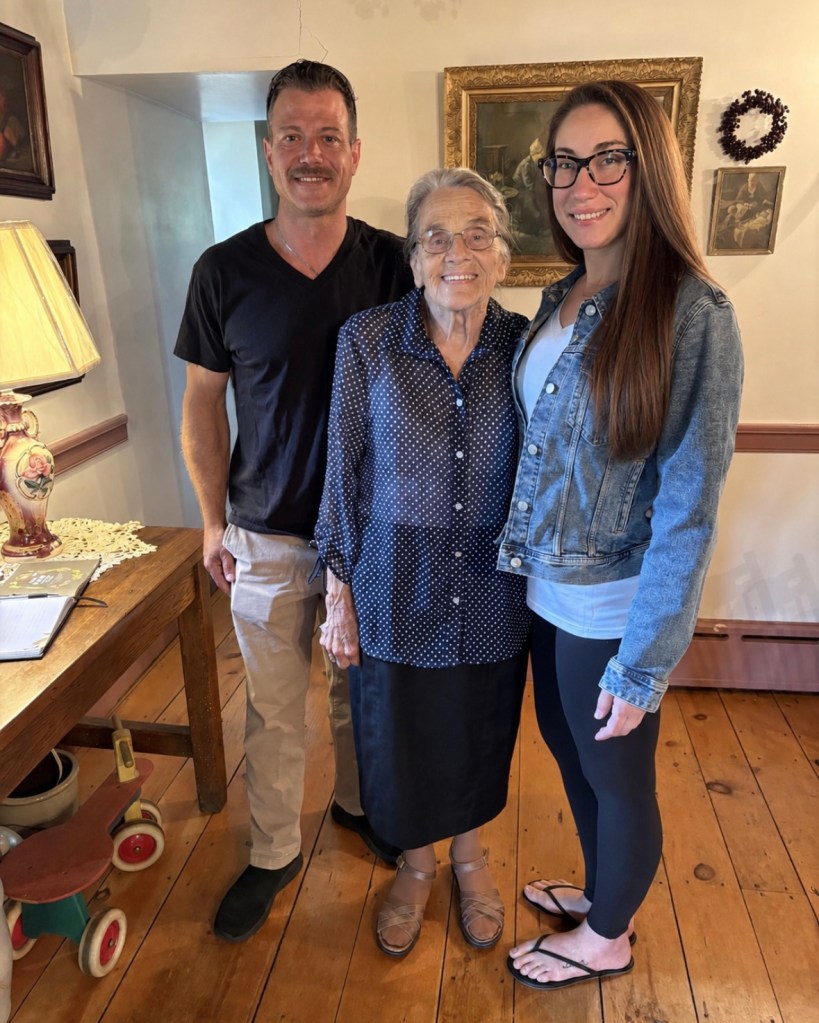
Breakfast stretched into nearly an hour of conversation around the table with Florence and the other guests. There was nowhere we urgently needed to be, and for once, we didn’t feel the need to rush.
Eventually, though, Amish Country was waiting.
Wandering Through Intercourse
Our first stop was Intercourse, Pennsylvania, where we spent some time wandering through town, browsing antique shops, and admiring the craftsmanship the area is known for.
One of the things that becomes apparent very quickly in Lancaster County is the pride taken in making things well. Furniture, cabinetry, quilts, food—there is a sense that things are meant to be useful, beautiful, and built to last. It was the perfect place to wander without much of an agenda.
From there, we headed to Ronks for one of the experiences we had been looking forward to most – churning our own butter.
Making Butter at Old Windmill Farm
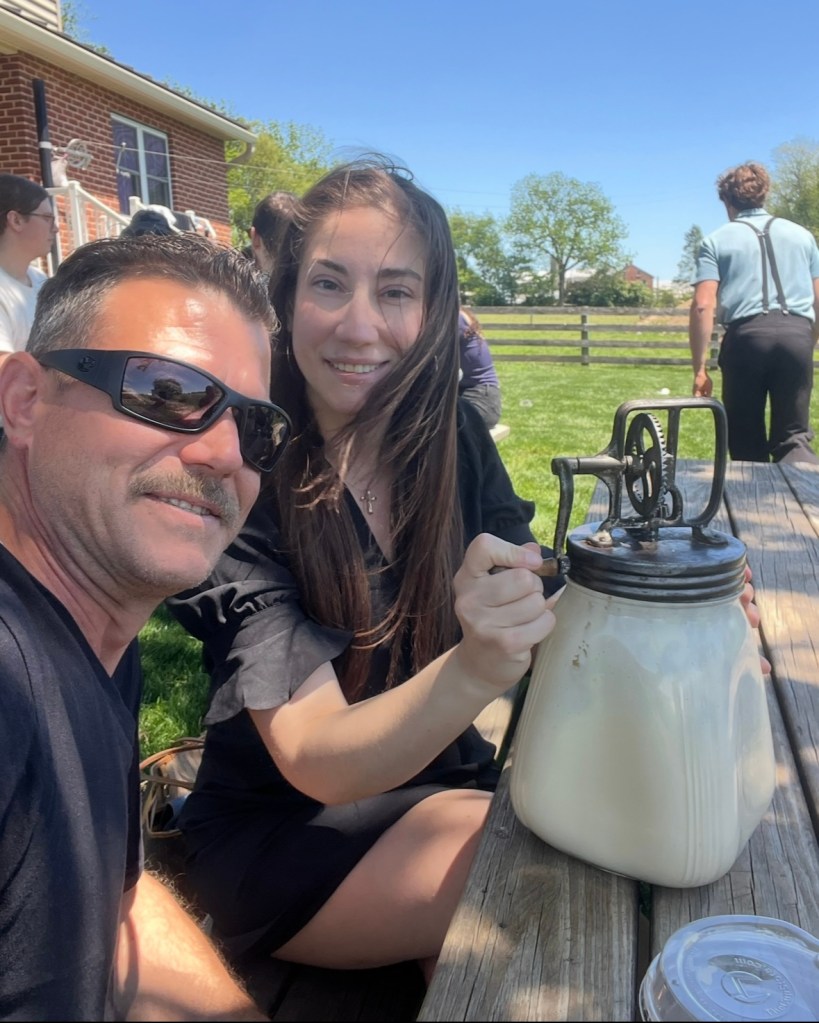
At Old Windmill Farm, we got to try something neither of us had done before: churn our own butter from raw Amish cream. With a long list of food allergies, finding an experience involving food that Rebecca could actually participate in—and eat afterward—is no small feat. Somehow, hand-churning fresh butter on an Amish farm made it even better.
Moses, the eldest son of the family, walked us through the process and told us about life on the farm. During the week, he works as a welder and on weekends, he helps his family with farm tours and butter making workshops.
After enough churning, our cream finally transformed into butter, which felt like a disproportionately satisfying accomplishment.
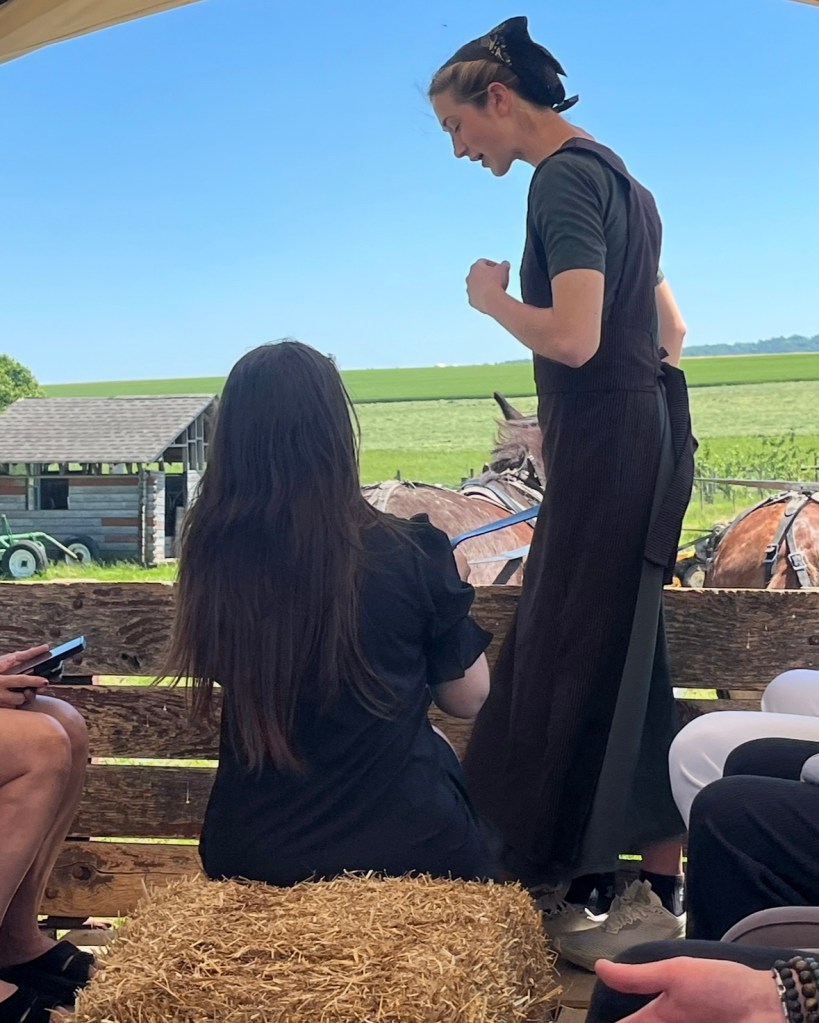
Our visit also included a ride around the farm led by Moses’ sister. As we traveled around the property, she explained more about their daily routines and what it takes to keep the farm running. Before returning to work on the family farm full time, she had spent four years teaching in the community’s one-room schoolhouse. Hearing about her experiences offered another small glimpse into a way of life that exists alongside the modern world while intentionally remaining distinct from much of it.
An Evening With the Amish
That evening, we joined the Amish Experience’s Visit-in-Person Tour. Rather than simply driving past Amish farms and homes, the tour brought us to three Amish families who welcomed us onto their properties and talked openly about their lives, businesses, and community. Our guide, Bruce, drove our small group from one stop to the next.
Stoltzfus Dairy Farm
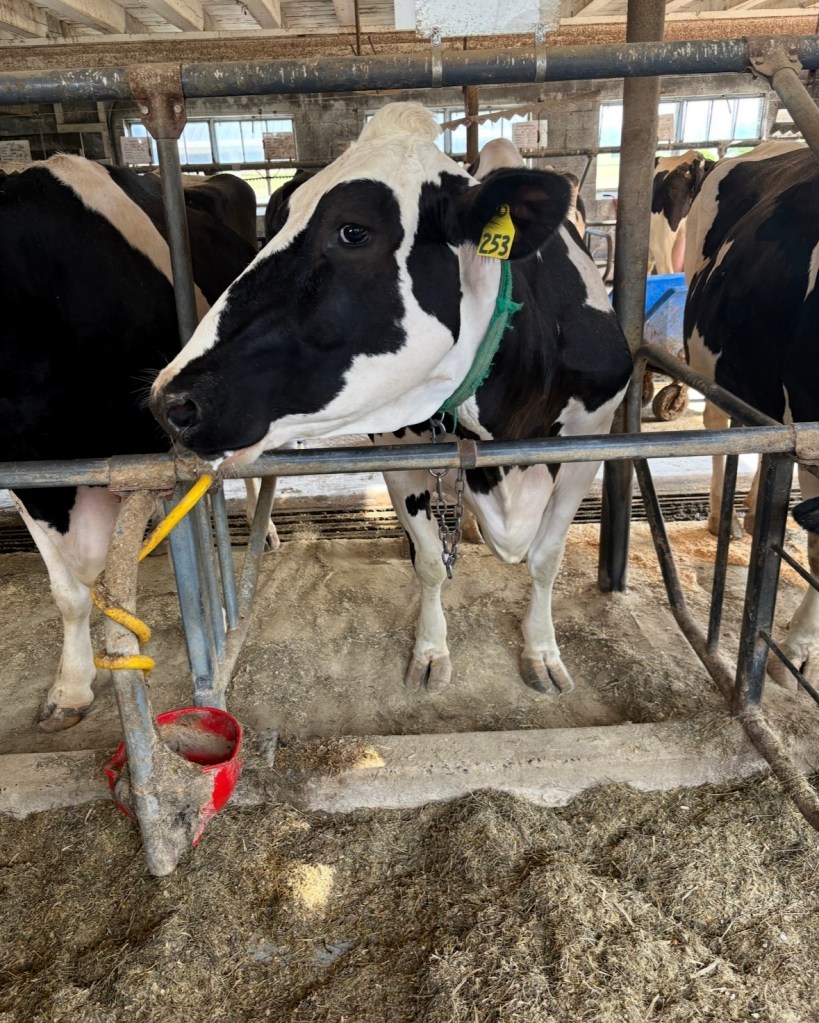
Our first visit was the Stoltzfus Dairy Farm, operated by Jacob and Rebecca Stoltzfus. Their oldest son, who had recently completed his formal schooling, showed us around the property. We saw the dairy cows, learned where and how their feed was stored, and heard about the process of collecting and storing fresh milk until it is picked up and transported to a commercial facility for processing.
It was interesting to see how traditional Amish life and modern agricultural requirements intersect. There may have been horses and buggies outside, but running a working dairy farm is still very much a business.
Hillside Carriage Shop
Our next stop was Hillside Carriage Shop, owned by Jonas and Emma Stoltzfus (not related to the two other Stoltzfus families we met).
Jonas builds custom horse-drawn buggies for members of the Amish community, and his workshop offered a fascinating look at just how much craftsmanship – and customization – goes into something we had previously thought of as fairly simple and uniform. We saw different materials and options available to customers, along with a prototype rear-entry buggy Jonas was building for his own family.
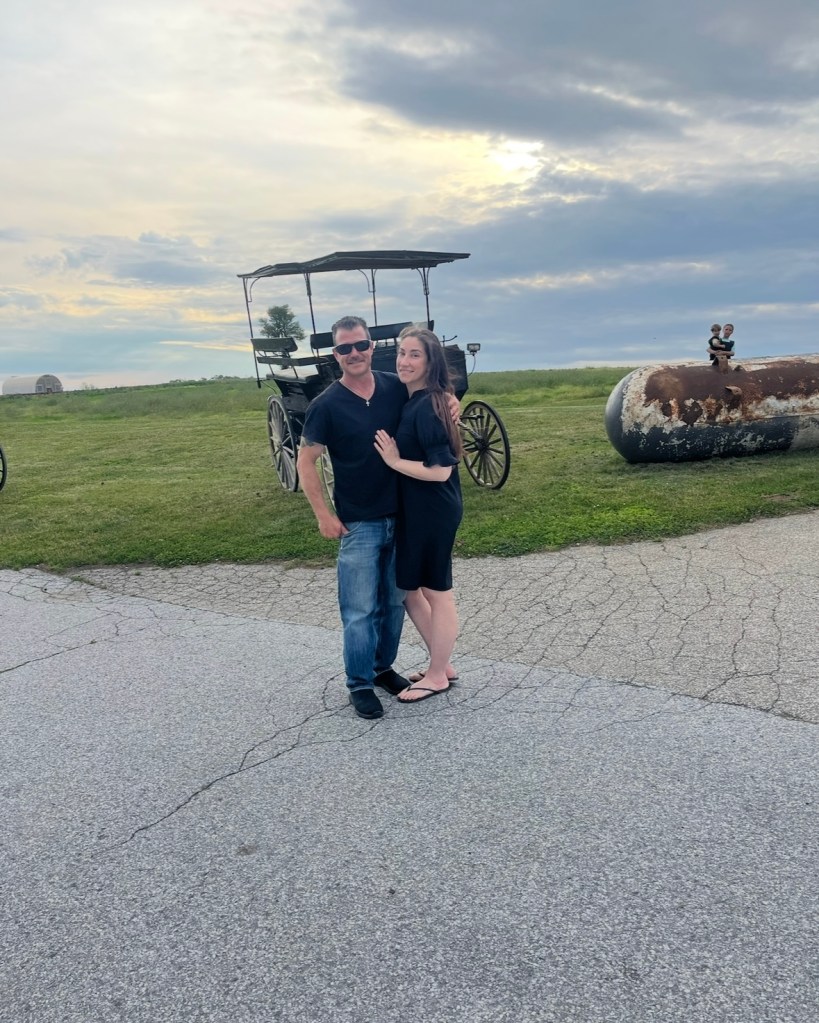
And then we learned what one costs. Depending on the options, Jonas told us a buggy could run somewhere between $7,000 and $15,000 (which does not include the horse!). Suddenly, owning a buggy didn’t sound quite as old-fashioned—or inexpensive—as we had imagined.
A Visit with John and Susie Fisher
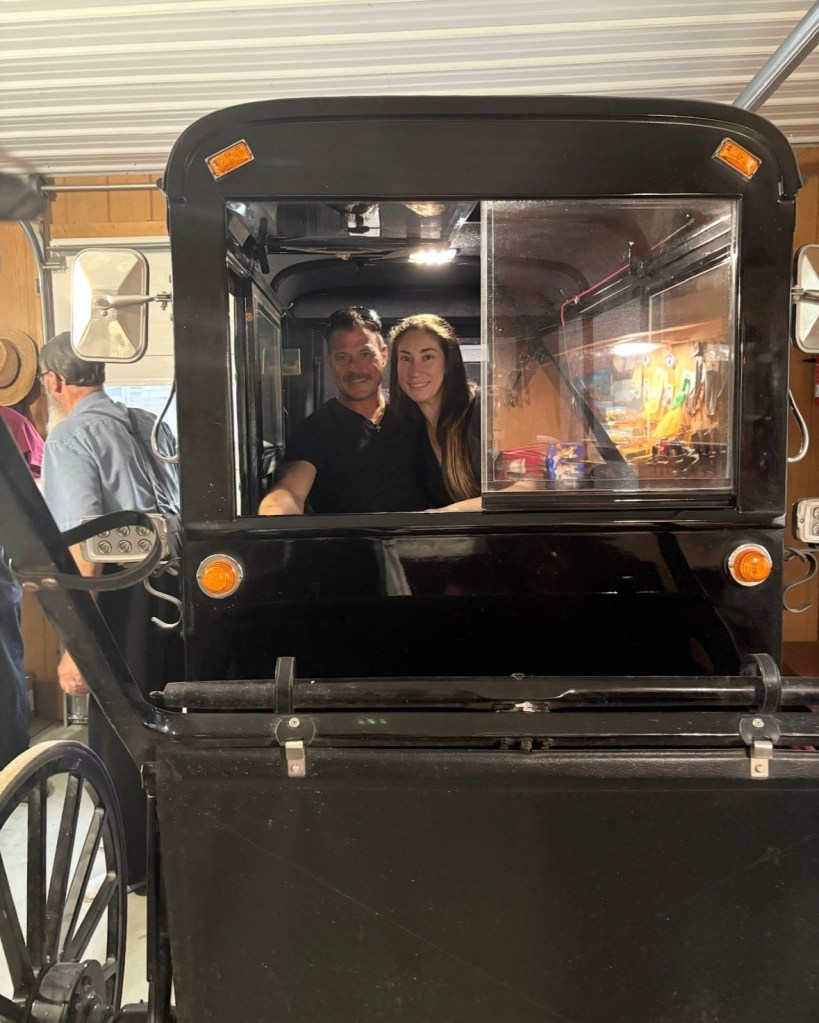
Our final visit to the home of John and Susie Fisher, a retired Amish couple who welcomed us in and spent the evening answering questions about their lives and community. They let us climb into their weekend buggy for a photo, and Susie showed us her quilting as she worked.
One of the most fascinating conversations was about how their community handles medical expenses. Rather than relying on conventional health insurance in the way most Americans do, John and Susie explained that families contribute money into a community fund. When someone becomes ill or needs medical treatment, money can then be drawn from that fund to help cover the expense. It was one of those conversations that stayed with us afterward—not because we walked away thinking one system was necessarily better than another, but because it was such an interesting example of how differently a community can organize itself when its members are deeply interconnected.
By the time Bruce drove us back that evening, we felt like we had learned far more than we could have from simply touring the area on our own.
One More Breakfast with Florence
Sunday morning meant one more homemade breakfast at the farm after Florence led us in morning prayer.
Sunday in Amish Country is quiet by design. Amish-owned businesses are closed, families attend church, and the pace slows even further. So we decided it was time for another detour. Philadelphia was on the way home, and there was somewhere Rebecca had wanted to visit since her college days.
Eastern State Penitentiary
Eastern State Penitentiary is unlike almost any historic site we have visited. Opened in 1829 and operating as a prison until 1971, Eastern State became famous for its revolutionary—and ultimately controversial—approach to incarceration. Its early system centered around solitary confinement, with prisoners intentionally isolated from one another.
The design of the prison reinforced that isolation. Cells were constructed so inmates could not see into the corridors. Guards reportedly wore coverings over their shoes to minimize sound, and prisoners were hooded when being moved through the facility so they couldn’t learn its layout.
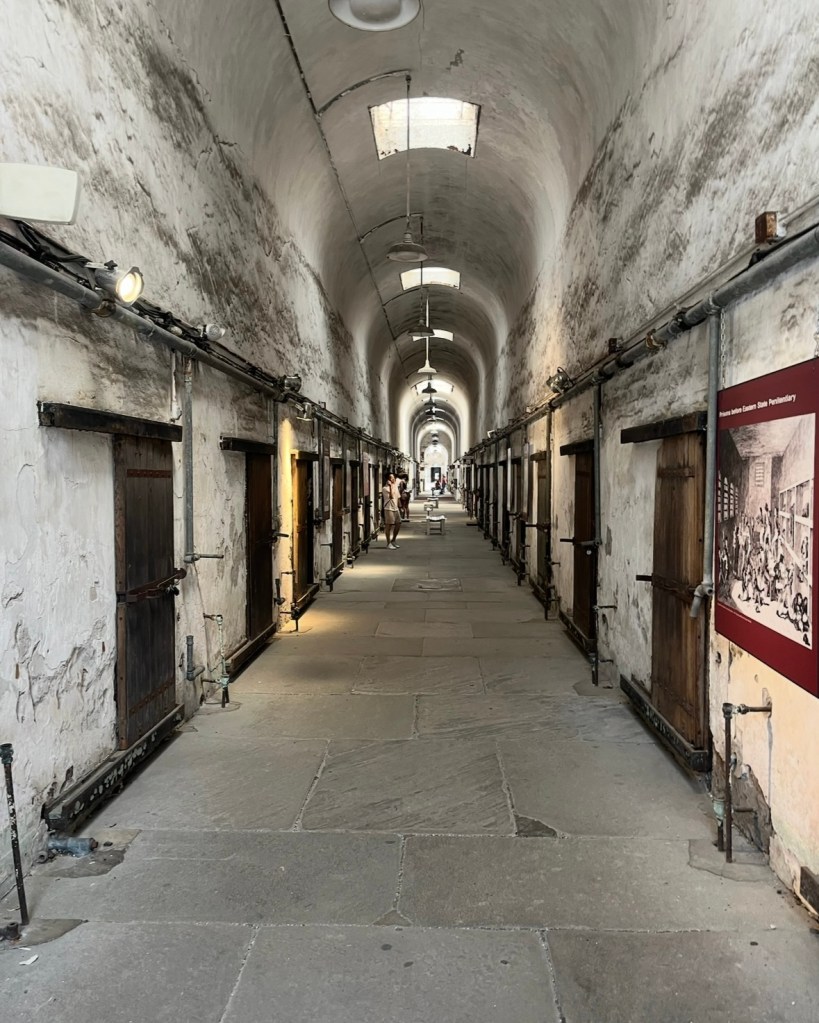
Remarkably, this system remained in place until 1913! Today, Eastern State is preserved in what is described as a state of “managed ruin.” Crumbling walls, peeling paint, open corridors, and portions exposed to the elements are part of the experience rather than something that has been restored away.
We had hoped to take a guided tour, but it was sold out, so we opted for the self-guided audio tour instead. Because so much of the property is exposed to the elements, we were particularly grateful for the beautiful weather.
Walking those corridors was eerie, fascinating, and thought-provoking—the kind of historic place that leaves you with more questions than you had when you arrived.
One Last Essential Stop
Of course, we couldn’t leave Philadelphia without Kevin getting a cheesesteak.
After a weekend of homemade breakfasts, fresh butter, Amish farms, buggy workshops, history, and more conversations with strangers than we could have anticipated, a Philly cheesesteak seemed like an appropriate final stop.
Then we pointed the car toward home.
While this weekend getaway hadn’t taken us particularly far away, that’s part of what we loved about it. Adventure doesn’t always require an airport, a passport, or weeks of planning. Sometimes it means taking the back roads, staying in a centuries-old farmhouse, sitting around a breakfast table longer than expected, and saying yes when an interesting detour presents itself.
We headed home already talking about where we might go next. After all, the world is a big place, and there is always something new waiting beyond the pond.


Leave a comment